No content results match your keyword.
Content
You have successfully logged out.


Surface disinfection
Every contact is also an exchange: not only do we catch germs from objects and other people, we also leave them behind ourselves as well. During mundane everyday activities such as using telephones, keyboards or door handles, germs are spread through direct contact with the surfaces. In veterinary practices, unwanted pathogens are often found on floors, work surfaces, sinks, fittings, medical devices, and other surfaces. As such, the prevention potential of professional surface hygiene is high.
The pathway to the patient is short. For this reason, hygienically flawless surface disinfection and cleaning at the veterinary practice and veterinary clinic serves both cleanliness and infection prevention – to protect both patients and staff. B. Braun is your competent partner when it comes to minimizing infection risks: both with effective products suitable for everyday use and with its knowledge and consultancy services.
Whether in veterinary clinics, practices, or other veterinary institutions: most of the existing surfaces are constantly in contact with people, patients, and materials. In contrast to human medical facilities, veterinary practices and clinics often experience an increased soiling of surfaces (especially operating tables and floors) and thus an increased risk of contamination/infection for staff and patients. On the one hand, you’ve got visible contamination by blood or secretions, while on the other, you’ve got germs and pathogens that aren’t visible to the naked eye. Professional hygiene management in veterinary medicine therefore naturally also includes almost all areas of a room, and it analyses and determines in which areas cleaning and disinfection is required.
The aim of surface disinfection is always to reduce the bacterial count and to kill pathogenic and opportunistic pathogenic microorganisms.
In general, a distinction is made between:
The RKI recommends a division into different risk areas. The intensity and frequency of cleaning and disinfection measures are based on the given risk area. The criteria are:
a) The likelihood of direct contact
b) Possible contamination with pathogens
c) The degree of clinically relevant immunosuppression of the patients
This results in the following classifications:
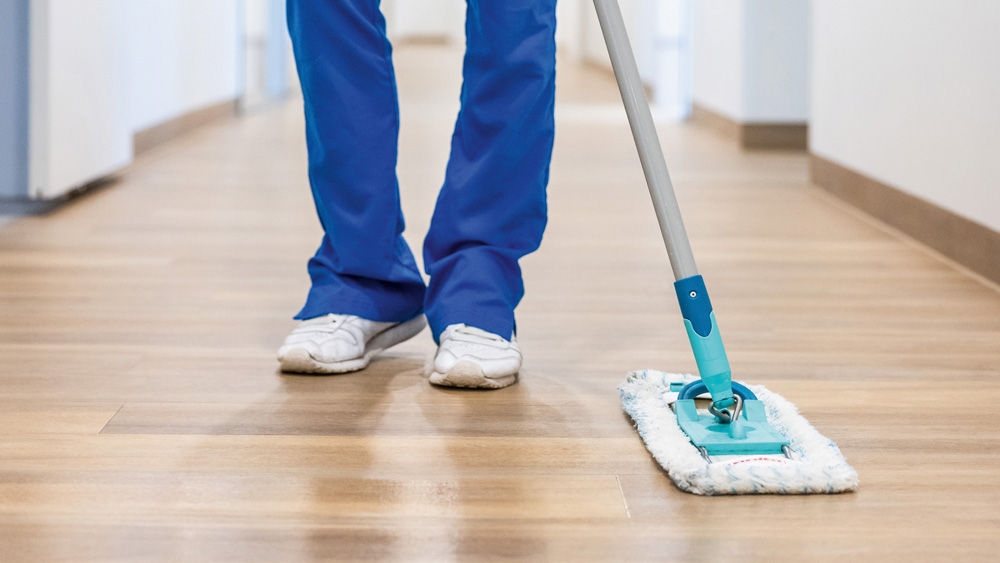
Veterinary medicine differs from human medicine in that patients are on the floor and there is also a risk of contamination here.
The Association of Scientific Medical Societies (AWMF) recommends the following in its hygiene requirements for household cleaning and surface disinfection:
“Patient-facing surfaces with frequent skin/hand contact by patients and staff, as well as surfaces far away from patients with frequent opportunities for contact, should always be cleaned with disinfectant. This applies regardless of whether there is visible contamination or not.”
In order to ensure effective protection of the cleaning personnel, the following rules should be observed:
Patient surroundings and risk areas (e.g., ICUs and ORs) should be disinfected with a contact time (also known as dwell time) of at least one hour. This also applies to areas that are visibly contaminated. The disinfectant is distributed over the surface with light pressure so that everything is sufficiently wet and moist.
If there is massive contamination with organic material (blood, secretions, etc.), proceed as follows:
Disinfectant solutions should normally be prepared freshly if they are not already available ready for use. The standards listed in the Association for Applied Hygiene e. V. (VAH list) and in the DVG list (disinfectants for use in veterinary practices and clinics and animal shelters) regarding the given concentration-time relationships must be strictly adhered to. Residual and and leftover working solutions must not be left open for a longer period of time. The maximum keep duration is one working day.
Precise dosing is an absolute prerequisite for effective disinfection. Dosing aids should be used to measure concentrates or type-tested disinfectant dosing units should be used to avoid under- or overdosing.
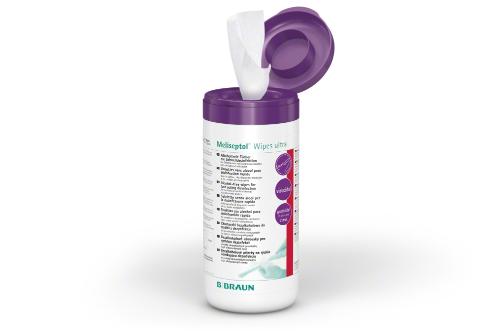
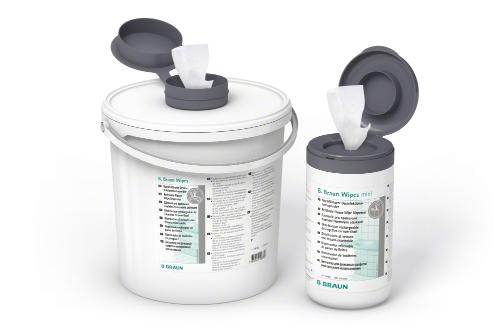
Only fresh wiping utensils (cloths, mops, etc.) may be used to remove disinfectant from the containers – protective gloves must be worn during handling. Cleaning utensils must be disinfected, prepared and dried after use. The possibility of bacterial growth on the cleaning utensils must be ruled out. If this is not possible, disposable wipes must be used.
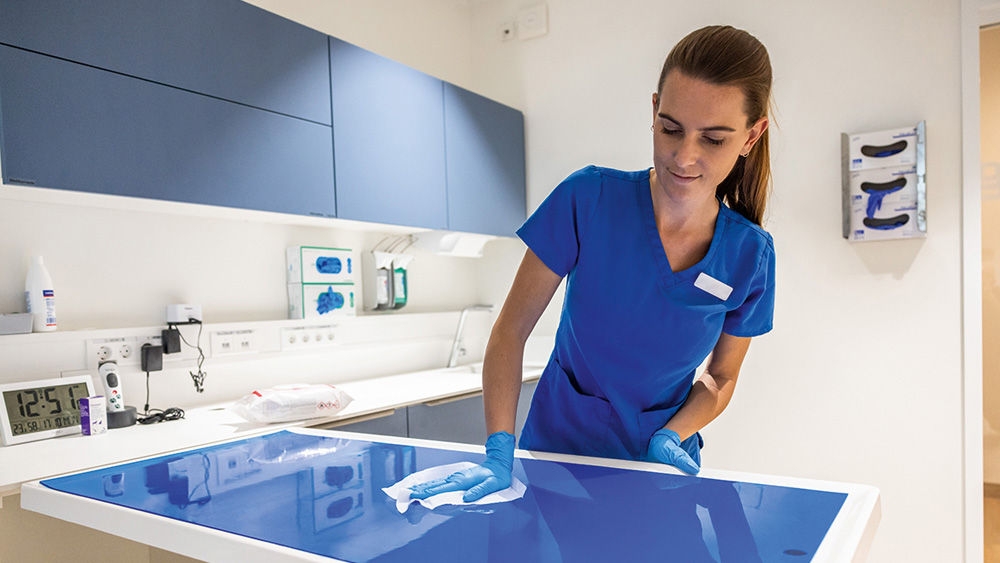
When performing surface wipe disinfection, it is recommended to change the wiping cloth before each immersion in the disinfectant solution. The only way to prevent the spread of microorganisms is to use a fresh wiping cloth each time.
The so-called “single bucket method” – that is, the repeated immersion of a cloth or wiping utensil – must be avoided.
According to the RKI Hygiene Requirements for Cleaning and Disinfecting Surfaces recommendation, the disinfected surfaces can be used again as soon as they are visibly dry after routine disinfection measures.
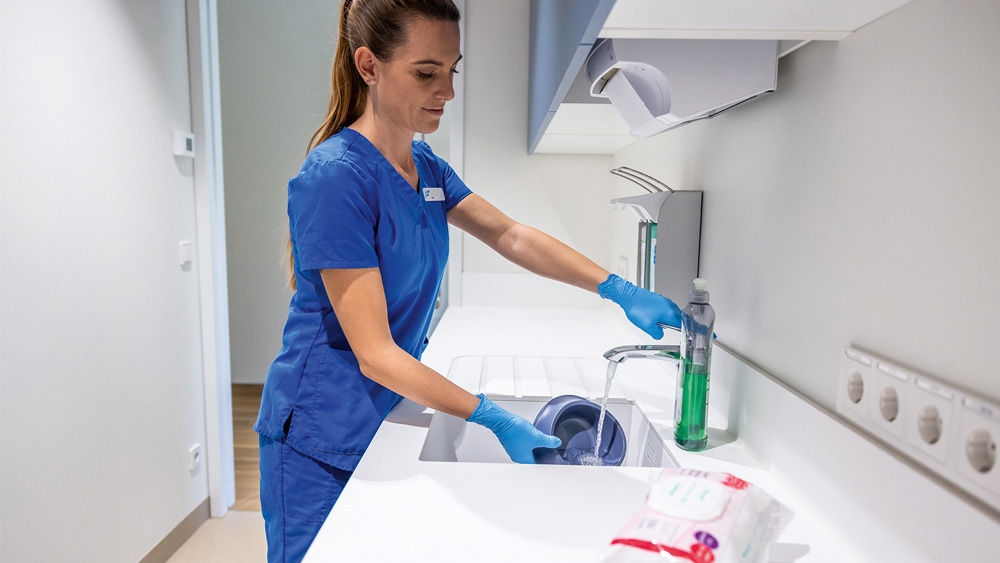
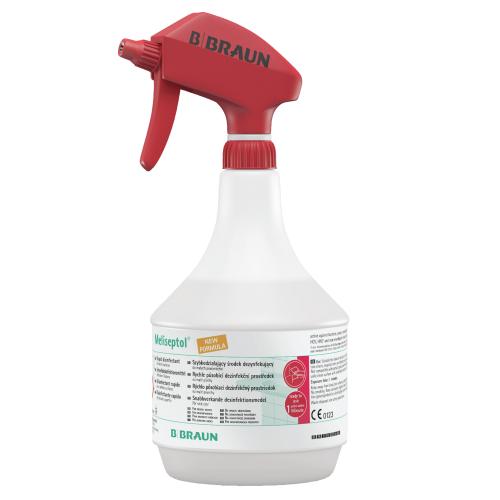
Rapid disinfectants are particularly recommended in rooms that are often frequented by patients. There are a few rules that must be observed when using alcohol-based rapid disinfectants:
As a result of nebulization of the disinfectant during spray disinfection, the active ingredients can enter the respiratory tract. This can lead to damage to the respiratory tract. Therefore, this type of disinfection should only be used in exceptional cases and in compliance with the recommended protective measures.
Some of the most important recommendations on hygiene requirements for cleaning and disinfecting surfaces can be found on the Robert Koch Institute (RKI) website, the Association of Scientific Medical Associations (AWMF) website, and in the Industrial Association for Hygiene and Surface Protection (IHO) brochure.
When using instrument and surface disinfectants, it is often underestimated in daily practice how important the selection of disinfectant agents is. Although the different suitability for certain materials and a different spectrum of action are decisive, the compatibility of the active ingredients of the products used in combination is equally important in order to prevent undesirable reactions.
Use of aldehyde- and amine-containing disinfectants together is particularly critical. These two groups of active ingredients react with each other and lead to an irreversible brownish discoloration. This is especially important when disinfectants are changed. It is recommended to stay with a group of active ingredients or to ensure that all residues are safely rinsed off before using the new product.
The problem of incompatibilities between two groups of active ingredients when using surface and instrument disinfectants based on different active ingredients is less well known. Discoloration can also occur here, e.g., if work surfaces have been disinfected with a surface disinfectant containing aldehyde and droplets of the amine-containing instrument disinfectant solution reach these surfaces when preparing instruments.
When considering the use of B. Braun disinfectants, the compatibility list is an important tool. Find out at a glance, which products can be safely used in combination in your daily work and which preparations are not compatible with each other.
Floor disinfection and cleaning
Practical tips
link
Production of ready-to-use disinfectant solutions
Dosing table
link
Spray disinfection of surfaces
Practical tips
link
Compatibility of surface and instrument disinfection
Table
link
At a glance – B. Braun hygiene products for instruments and surfaces
Table
link