No content results match your keyword.
Content
You have successfully logged out.


Intravascular catheter-related Infections
Vascular catheters are of great importance in the care and treatment of patients. On the one hand, they are important for the administration of medication and infusions. On the other hand, they pose an infection risk, as microorganisms can penetrate the skin through the puncture site and lead to local infections. Microorganisms can, however, also enter the bloodstream and thus spread hematogenously, which can sometimes result in a primary sepsis infection.
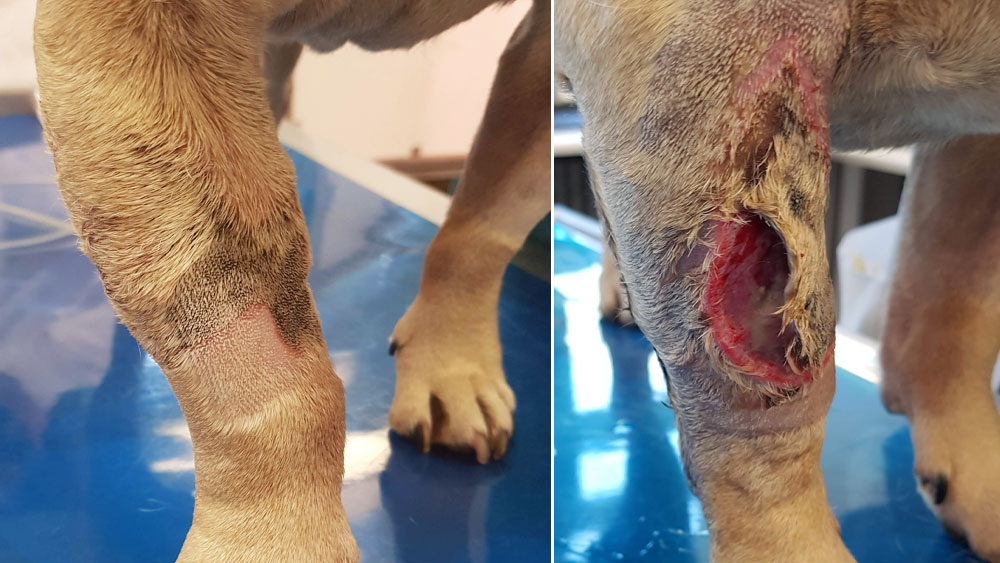
In human medicine, septicemia with positive blood culture accounts for approximately 10 percent of all nosocomial infections. Intravascular catheters are thereby directly or indirectly involved in causing a sepsis infection with a mortality rate of 25 percent.1
In veterinary medicine, there is considerably less data on this topic. The complication rate for peripheral venous catheters (PVC) is up to 46 percent2 while for central venous catheters (CVC), it is 39 percent.3 A distinction is made between mechanical or inflammatory/infectious complications. Phlebitis is one of the most common complications.4 Such phlebitis may be caused by mechanical, chemical or infectious agents.5 Bacterial colonization of catheters in veterinary medicine is a major problem and has been described with incidences of 15 to 39.6 percent in the literature. In some cases, multi-resistant pathogens have been detected in 46 percent of positive cultures.2, 6–9
In human medicine, peripheral venous catheters have long been ignored as a cause of sepsis, as the risk is significantly lower than is the case with CVC. However, the application rate is significantly higher, meaning that the number of avoidable catheter-associated septicemias is presumably still high.
ICRI or sepsis becomes apparent when the pathogens have found access to the catheter tip. In principle, pathogens can gain access via the outer catheter surface or through the catheter lumen.10
The most common causes are interruptions in asepsis during catheter placement and handling, e.g., when infusion sets are changed or medication is administered. In human medicine, it is recommended that patients be connected to an infusion and that the set-up be left as a closed system for up to 96 hours. Each disconnection increases the risk of contamination of the catheter. In veterinary medicine, frequent disconnection is common, as animal patients cannot carry the infusion system around with them without great effort. Other causes might include contaminated medication, puncture-site contamination caused by secretions or excrements, or contamination caused by unprotected Luer-Lock connections.11, 12
Here, too, we know from human medicine that the infection rates can be reduced through targeted prevention measures as well as further training.13
Good process hygiene when placing and handling catheters, administering infusion therapies and preparing and administering drugs play a decisive role in prevention.
Related information
Intravascular catheter-related infections
Learn more


