No content results match your keyword.
Content
You have successfully logged out.


Catheter-associated urinary tract infections
Urinary tract infections are among the most common NI/HAI in veterinary medicine with an incidence of 10 to 32 percent.1-5
One cause for an underlying increased incidence might be that the urinary catheter is disturbing the physiological drainage and barrier function – the urinary bladder is normally fully deflated during micturition and the formation of a mucus layer on the urinary epithelium provides further protection. The urinary catheter prevents the bladder from emptying completely. In addition, urine collects at the bottom of the bladder in the area of the balloon. When placing the catheter, micro lesions can develop in the urethral epithelium and the integrity of the mucus layer can also be impaired. Placing the catheter may also allow initial bacteria of the periurethral flora to enter the bladder.
Shortly after the catheter has been inserted, a biofilm forms on both the inner and outer surface of the catheter in which the bacteria can multiply.
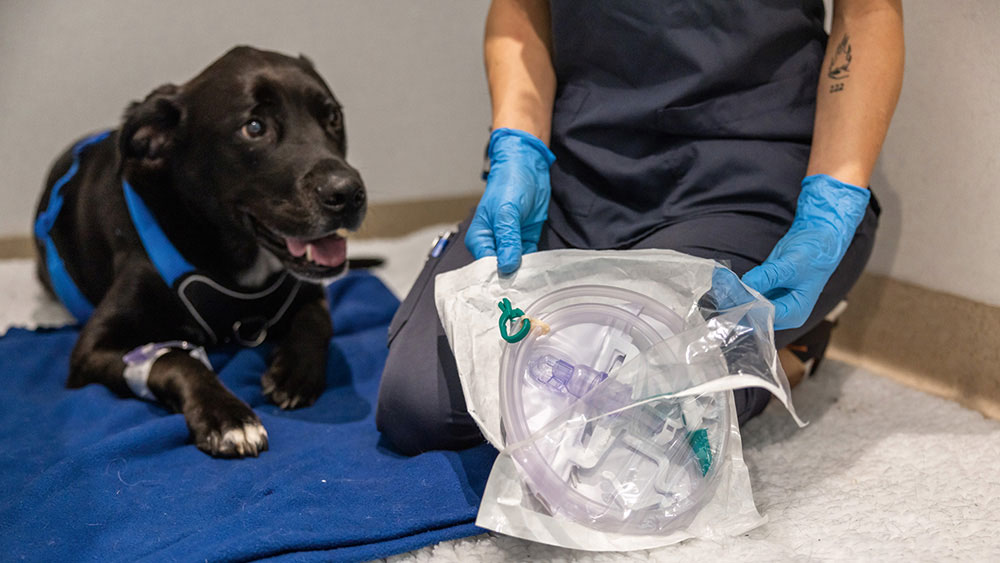
The likelihood of a urinary tract infection in veterinary medicine increases by 20 percent with every year of life, by up to 27 percent per catheterization day and by 45 percent if the dog is on antibiotic therapy. 6 In human medicine, 17 percent of all nosocomial bacteremias are caused by catheter-associated urinary tract infections. Urosepsis is associated with a mortality of 10 percent.7
The pathogen reservoir of CAUTI is primarily the endogenous flora of the gastrointestinal tract and the urogenital tract, but also other sources of infection due to interruptions in asepsis when inserting the catheter.8 Reducing these nosocomial infections (NI) is a challenging task. Nevertheless, a reduction in CAUTI can also be achieved here by strict indication and avoidance of unnecessary catheter days, as well as good basic and process hygiene.
Related information
Catheter-associated urinary tract infections
Learn more


